Moving from a North Hill flat? Tips for tight staircases
Posted on 26/05/2026
If you are moving from a North Hill flat, tight staircases can turn a normal moving day into a bit of a puzzle. One awkward landing, one banister too close, one sofa that looked perfectly manageable in the lounge - and suddenly you are reshuffling plans at the door. It happens all the time. The good news is that with the right approach, a narrow stairwell does not have to mean damaged furniture, bruised knuckles, or a stressful morning.
This guide walks you through the practical side of moving from a North Hill flat? tips for tight staircases in a way that actually helps on the day. You will find planning advice, lifting tactics, packing decisions, safety points, and a few local-sense observations that can save a lot of faff. Whether you are leaving a top-floor flat, a converted maisonette, or a place with a particularly unfriendly turn in the stairs, the aim is the same: move smarter, not harder.
![An overhead view of a wooden spiral staircase inside a residential property, captured from the top looking down towards the ground floor. The staircase features curved wooden steps with a dark grey painted riser, and a smooth, rounded wooden handrail following the spiral design. The balustrade consists of evenly spaced vertical wooden balusters. The cladding around the staircase is painted in a neutral light colour, contrasting with the warm tone of the finished wooden steps. At the bottom of the staircase, a small green upholstered chair with wooden legs is placed on the wooden floor, adjacent to a grey floor mat near the entrance or hallway area. The interior space is well-lit, with natural light possibly coming from an unseen window or adjacent room, creating shadows on the steps and balustrade. This image supports home relocation services by illustrating the challenges of navigating furniture through tight staircases, which [COMPANY_NAME], such as Man with Van Highgate, may encounter during removal or furniture transport within a property or between locations.](/pub/blogphoto/moving-from-a-north-hill-flat-tips-for-tight-staircases1.jpg)
Why Moving from a North Hill flat? Tips for tight staircases Matters
Flat moves are not all equal. A ground-floor studio is one thing. A second- or third-floor North Hill flat with a narrow staircase, a bend halfway up, and no generous landing is another thing entirely. The staircase becomes the main route, the main risk, and often the main reason a move runs late.
Why does it matter so much? Because tight staircases affect almost every part of the move: how you pack, which furniture you dismantle, how many people you need, how you protect walls and banisters, and whether your move is completed in one calm run or several frustrating attempts. If you have ever tried turning a mattress on a landing while someone is holding the front door open and another person says "bit to the left, no, the other left", you will know the feeling.
In practical terms, staircase constraints can lead to:
- scratches on walls and bannisters
- strained backs and shoulders
- damaged corners on wardrobes, sofas, and bed frames
- slower loading times and parking delays
- more trips, more fatigue, and more chance of mistakes
That is why planning around the staircase is not an optional extra. It is central to the move. If you are still in the early organising stage, our guide on decluttering before moving day can help reduce the number of items you have to wrestle through narrow spaces in the first place.
How Moving from a North Hill flat? Tips for tight staircases Works
At its simplest, a staircase move works by breaking the problem into smaller decisions. You measure, assess, prepare, and then move each item in the safest route possible. That sounds obvious, but a lot of problems happen because people skip the measuring step and hope for the best. Hope is lovely. It is not a moving strategy.
The process usually follows a pattern:
- Measure key items such as sofas, mattresses, wardrobes, and large appliances.
- Measure the staircase including width, turns, ceiling height, and landing space.
- Decide what can be carried intact and what should be dismantled.
- Protect the route with covers, blankets, and floor protection where needed.
- Assign roles so each person knows who leads, who spots, and who clears the route.
- Move in the right order with the most awkward items timed for when everyone is fresh.
In tight staircases, the movement itself is rarely a straight line. More often, it is a series of careful pivots, tilts, pauses, and resets. That is why techniques matter. A wardrobe might need to go in vertically, then rotate, then be lowered a few inches at a time. A sofa may have to be tip-tilted, with one end slightly raised to clear the banister.
If this sounds a bit technical, that is because it is. But it becomes manageable when you think like a puzzle solver rather than someone trying to rush the clock. For more context on handling tricky loads safely, you may also find this guide to kinetic lifting principles useful, especially for understanding how body position changes the strain on your back.
Key Benefits and Practical Advantages
Taking time to plan a staircase move brings real benefits. Not abstract ones. Actual, practical, day-of-move benefits that you will notice before lunch.
- Less damage to furniture, paintwork, and communal areas.
- Faster loading and unloading because each item has a clear route.
- Lower physical strain for everyone involved.
- Better control when you are carrying items around corners or down steps.
- More confidence, which sounds soft but really does help on the day.
There is another benefit people often forget: fewer decisions under pressure. If you have already worked out which items come apart, which boxes should be carried first, and where the awkward sofa needs to tilt, you are not improvising in the middle of a cramped stairwell. You are following a plan.
That also makes it easier to use the right kind of support. If you need flexible help for a flat move, our flat removals service in Highgate is designed around exactly this kind of access challenge. And if your move is more small-load or partial-load in nature, a man with a van in Highgate can be a sensible fit.
Who This Is For and When It Makes Sense
This advice is for anyone dealing with awkward internal access, but it is especially relevant if you are:
- leaving a top-floor flat with no lift
- moving through a shared staircase in a converted building
- handling bulky furniture like sofas, beds, wardrobes, or piano-like heavy items
- moving with limited help and trying to avoid injury
- on a timetable where a slow staircase could throw the whole day off
It also makes sense if you are a student moving out of a flatshare, a tenant aiming to clear the property quickly, or someone moving locally within Highgate and trying to keep the process contained. For smaller household loads, our student removals support can be a practical fit, while larger, more complex moves may need a broader removal services approach.
Truth be told, if you look at your staircase and immediately think, "that sofa is never making it round that turn," you are probably right. That is usually the moment to step back, reassess, and decide whether dismantling, temporary storage, or professional support will be easier than forcing the issue.
Step-by-Step Guidance
Below is a grounded way to approach a North Hill flat move where the stairs are the real obstacle. Keep it simple. Complicated plans tend to fall apart when someone's foot catches a box strap.
1. Survey the staircase before moving day
Walk the route with a tape measure and a notebook. Check the width at the narrowest point, the height under each landing, the size of turns, and whether there are awkward features like radiator pipes, railings, or a low ceiling at the bend. If you can, take photos. It sounds minor, but on the day those images can save time.
2. Match each item to the route
Not every piece of furniture should be carried the same way. Long items may need a vertical angle. Sofas may need the feet removed. Bed frames usually do better dismantled, and mattresses often move more cleanly in a protective cover. Our guide on moving your bed and mattress is a useful companion piece if a bedroom move is part of the plan.
3. Pack for shape, not just weight
In staircases, shape can matter more than weight. A light but oversized box can be harder to manage than a heavy compact one. Keep boxes small enough to see around. Use sturdy tape. Avoid overfilling. If you want a better system for the smaller items, these packing techniques are worth borrowing.
4. Clear the route fully
That includes hallway shoes, umbrella stands, loose mats, children's toys, and any bits of clutter that look harmless until somebody is backwards on a landing. You want a clean, uninterrupted route from the room to the van. If you still have things to sort out, a quick read of steps to a stressless transition may help you organise the overall move more calmly.
5. Protect the property
Use moving blankets, corner protectors, and floor coverings where needed. In communal blocks, it is respectful to keep noise and scuffing to a minimum. Small detail, big difference. In a building where the stairwell echoes, even one heavy box dropped too early can make the whole place feel tense.
6. Move awkward items first while everyone is fresh
This is one of those simple ideas that gets ignored. Do the hardest pieces first, before fatigue builds. A sofa at 8:30am is less annoying than a sofa at 2:30pm after eight trips up and down stairs.
7. Use a spotter at turns and landings
One person should lead the movement, while another watches for wall contact, foot placement, and clearance. If there is a tight corner, the spotter can call small corrections before the item gets stuck. And yes, that means talking calmly, not shouting "hold it there!" like you are directing an airport rescue.
8. Know when to stop and re-plan
If an item jams halfway, back it out. Do not wrestle harder. Re-check the angle, remove a door if necessary, dismantle a piece, or change the carrying position. Quick push-throughs are how scuffs and strains happen.
Expert Tips for Better Results
Once you have the basics covered, a few sharper tactics can make the move noticeably easier.
- Remove doors where practical. A room door or wardrobe door can create just enough extra clearance to prevent damage.
- Use furniture sliders and straps. They are not glamorous, but they help. A lot.
- Keep heavier items low and close. The closer the load sits to the body, the less strain it tends to create.
- Wrap corners before wrapping whole items. A few well-placed layers around sharp edges often prevent the worst knocks.
- Reserve one person for route control. Too many helpers in the stairwell can make things more confusing, not less.
In our experience, the biggest improvement comes from reducing "surprise decisions" on the day. Decide your moving sequence in advance. Put a note on the back of each room door if needed. Nothing fancy. Just enough to keep the process tidy.
If you are dealing with particularly bulky furniture, it may be worth looking at the dedicated furniture removals support. For larger items that are especially awkward to turn, a service with more hands and the right equipment can be a lot less stressful than improvising with friends and hope.
One more thing: if you are moving a freezer, plan that separately. It is a heavy item with awkward balance and handling needs. A little guidance on freezer storage and handling can help you avoid avoidable problems during transit and after delivery.
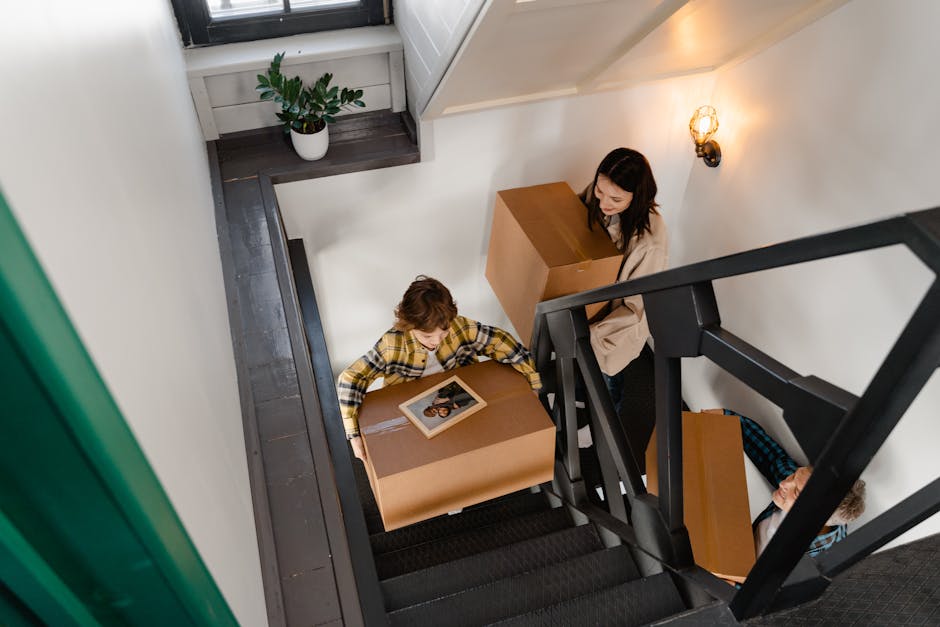
Common Mistakes to Avoid
A narrow staircase is not forgiving, so the mistakes tend to show up quickly. Here are the ones worth avoiding.
- Skipping measurements. A guess is not the same as a plan.
- Leaving packing until the last minute. Loose, badly packed boxes are harder to grip and more likely to shift.
- Trying to carry too much at once. One oversized box is often worse than two smaller ones.
- Not checking communal access rules. Some buildings have timing, parking, or lift-use expectations that affect the move.
- Forgetting to protect walls and floors. A tiny scrape now can become an irritating repair later.
- Ignoring fatigue. Tired people make clumsy choices. That is just how it goes.
There is also a mental mistake: assuming every item must be forced through in one piece. Sometimes the smarter move is to dismantle a bed, remove legs from a sofa, or put a fragile item into storage for a short period. If temporary holding space would make the move easier, storage in Highgate can be a very practical bridge between addresses.
Tools, Resources and Recommendations
You do not need a truck full of specialist kit to handle a staircase move well, but a few tools make the job noticeably safer and smoother.
| Tool or resource | What it helps with | Why it matters in tight staircases |
|---|---|---|
| Measuring tape | Checking furniture and stair dimensions | Prevents avoidable size mismatches |
| Furniture blankets | Protecting paintwork and furniture edges | Reduces scuffs on narrow turns |
| Removal straps | Improving grip and load balance | Useful on awkward, heavy items |
| Mattress cover | Keeping bedding clean and dry | Helpful on close stairwells and landings |
| Small sturdy boxes | Safer lifting and easier stacking | Better than oversized, awkward cartons |
A couple of further resources are worth considering. If you want to understand the physical side of handling heavy objects, solo heavy lifting advice can help you think clearly about what should and should not be done alone. And if you want to reduce the number of boxes in the first place, our packing and boxes service may save you a surprising amount of time.
For reassurance around service quality and process, it can also help to review the company's health and safety policy and insurance and safety information before moving day. That sort of check is not exciting, admittedly, but it is sensible.
Law, Compliance, Standards and Best Practice
For a domestic flat move, there is usually no special law about how to carry a sofa down stairs. Still, several UK best-practice points matter in real-world moving work. The first is simple: avoid unsafe lifting and carrying. If a load is clearly too awkward for the number of people available, do not force it. That is common sense, but it is also the right standard of care.
If you are moving in a shared building, be mindful of building rules, neighbour access, noise, and any parking restrictions around loading. In some London streets, the practical side of parking and stopping can affect the whole schedule, so it is wise to check the arrangements in advance rather than guess at the kerb and hope nobody complains.
Good practice also means:
- keeping communal areas as clean and undamaged as possible
- using suitable lifting techniques and team coordination
- not blocking fire exits or shared access routes
- making sure fragile items are packed properly before movement
- using trained help for unusually heavy, valuable, or awkward items
If you are hiring a moving team, it is sensible to ask how they manage access issues, whether they carry protective materials, and what happens if a piece needs dismantling. You can also review the services overview to understand the options available, or check pricing and quotes if you are comparing levels of support.
Options, Methods, and Comparison Table
Not every staircase move needs the same approach. Sometimes a DIY team is fine. Sometimes it is absolutely not. The table below gives a simple way to compare common options.
| Approach | Best for | Pros | Watch-outs |
|---|---|---|---|
| DIY with friends | Small flats, light furniture, simple access | Lower upfront cost, flexible timing | Higher risk of strain, damage, and delays |
| Man and van support | Mixed loads, medium-sized flat moves, local trips | More practical than full DIY, usually quicker | Needs clear briefing on access and item sizes |
| Full removals team | Bulky furniture, awkward staircases, larger inventories | Best coordination, safer handling, better equipment | Typically the most involved option |
| Short-term storage first | Staggered moves, delayed completion, space problems | Reduces pressure on the move day | Extra step and planning needed |
For some people, the best answer is a mixed one. Take what you can safely carry yourself, and let experienced help handle the awkward pieces. That is especially useful when the staircase is the bottleneck rather than the volume of items.
Case Study or Real-World Example
Imagine a typical North Hill flat move: third floor, no lift, a narrow staircase with one sharp turn, and a sofa bed that looked much friendlier in the living room than it does in the hall. The occupants had packed most of the smaller boxes well, but the larger furniture was the real problem.
Instead of trying to carry everything in the obvious order, they did three things differently:
- they measured the sofa bed and the stairwell before moving day
- they removed the sofa feet and dismantled the bed frame
- they moved the heavy furniture first, before everyone got tired
They also used blankets along the banister and had one person acting as a spotter on the landing. Nothing dramatic. Just disciplined, careful work. The result was a move that took a bit longer to prepare for, but far less time to complete. No chipped paint, no panicked re-angle at the stair bend, and no last-minute "I think we need another trip to the van" moment.
That is usually how good flat moves work. Not by magic. By boring little decisions made early. A bit of planning, a bit of patience, and the whole day feels less like a fight.
If your move includes a piano, do not treat it like a normal heavy item. Read why DIY piano transport is risky first, because staircases and pianos are not a casual combination. Not even a little.
Practical Checklist
Use this checklist in the final 48 hours before the move. It keeps the staircase issue front and centre, where it belongs.
- Measure the widest and narrowest points of the stairs
- Measure sofas, beds, wardrobes, appliances, and any awkward items
- Decide what needs dismantling
- Pack fragile items in small, manageable boxes
- Label boxes clearly by room
- Clear all hallways, landings, and steps
- Protect walls, corners, and floors where possible
- Confirm parking and arrival timing for the van
- Assign one person to lead each awkward carry
- Keep water and a quick snack nearby; honestly, you will thank yourself later
One more useful move: if you are also cleaning out the property, a structured move-out clean plan can save you from rushing at the end. Small effort now, easier handover later.
Get a free quote today and see how much you can save.
Conclusion
Moving from a North Hill flat with tight staircases is not just about muscle. It is about judgment, route planning, preparation, and knowing when a clever workaround beats a brute-force attempt. Once you understand the staircase as the main constraint, everything else starts to fall into place more neatly.
Keep the loads sensible, measure early, protect the route, and do not be shy about using help for the awkward pieces. That little bit of planning can turn a cramped, tiring move into something far steadier and far less stressful. And really, that is what most people want at the end of the day: to get everything out safely, without the whole house feeling like it has been through a wrestling match.
If you are ready to make the move smoother, review your options, get your measurements together, and take it one careful step at a time. Small steps. Good steps.
![An overhead view of a wooden spiral staircase inside a residential property, captured from the top looking down towards the ground floor. The staircase features curved wooden steps with a dark grey painted riser, and a smooth, rounded wooden handrail following the spiral design. The balustrade consists of evenly spaced vertical wooden balusters. The cladding around the staircase is painted in a neutral light colour, contrasting with the warm tone of the finished wooden steps. At the bottom of the staircase, a small green upholstered chair with wooden legs is placed on the wooden floor, adjacent to a grey floor mat near the entrance or hallway area. The interior space is well-lit, with natural light possibly coming from an unseen window or adjacent room, creating shadows on the steps and balustrade. This image supports home relocation services by illustrating the challenges of navigating furniture through tight staircases, which [COMPANY_NAME], such as Man with Van Highgate, may encounter during removal or furniture transport within a property or between locations.](/pub/blogphoto/moving-from-a-north-hill-flat-tips-for-tight-staircases3.jpg)